
By Stanley — Founder, NovaDyne · August 2026 · 8 min read
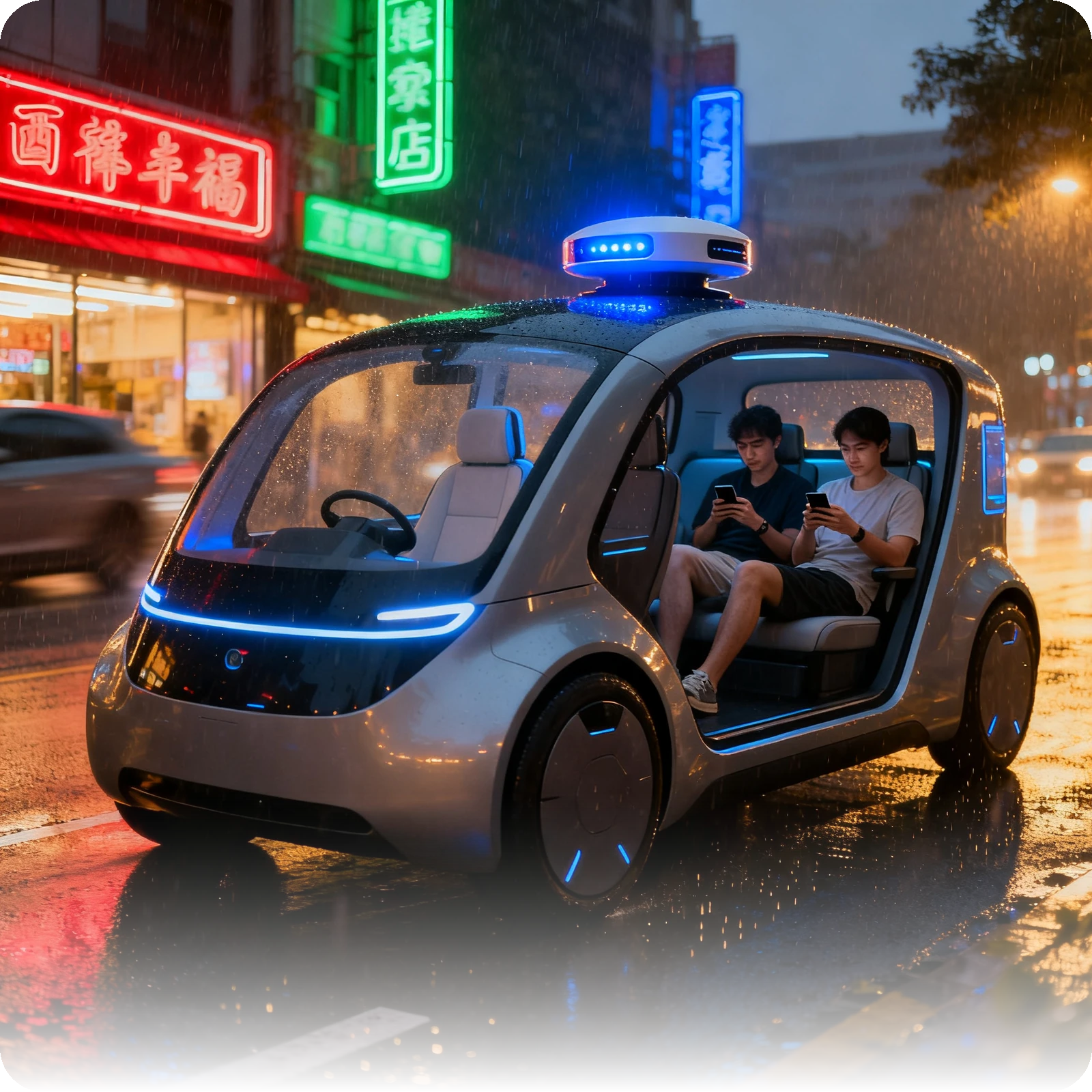
Two weeks ago I wrote about how my AI told me "no" about 120 times. Last week, about three hundred years of machines that were supposed to replace us. The question I keep getting since then is simpler and bigger:
"Okay Stanley — so what's coming next?"
Here's my honest map of the wave we're riding, where it's heading, and what a business owner should actually do about it.
If you feel like AI suddenly got serious in the last year — you're not imagining it. Since around November 2025, the intelligence of frontier AI has jumped so far that many researchers have started openly using a word they used to whisper: AGI. I'm careful with that word. But I'll tell you what I see from inside the industry: the two things that kept AI out of serious business use are collapsing.
First, the hallucination problem got small enough to engineer around. The old models would confidently invent facts — charming in a demo, disqualifying in an invoice. On summarisation benchmarks the error rate has fallen from roughly 3–8% in 2023 to about 1–2.5% today. That is the difference between unusable and buildable.
But I want to be straight with you, because the honest version is the only one worth reading: it is not solved. Depending on the task, frontier models still get somewhere between 3% and 19% of answers wrong, and that residual has barely moved in the last twelve months — citation-heavy work is still the worst of it. What changed is not that AI stopped being wrong. It is that the error rate came down far enough that you can design for it — check the risky steps, keep a human on the decisions that matter, and let the machine do the other 80%. Any vendor who tells you their AI does not hallucinate is selling you something.
Second, and this is the part most people miss: today's AI can power legacy products. You don't need to rebuild your twenty-year-old system. The intelligence can be layered onto what already exists — reading the same screens, filling the same forms, speaking to the same database — and suddenly the old workhorse becomes extremely useful again. The steam engine needed new factories. This wave upgrades the ones you already own.
This is not the future — this is currently rolling out, and it looks exactly like the phone wave I described last week: one ordinary convenience at a time, until it's simply how life works.
None of these announce themselves. They just arrive, the way QR payment arrived at the satay stall. In five years, a business without this layer will feel like a shop without a phone number.
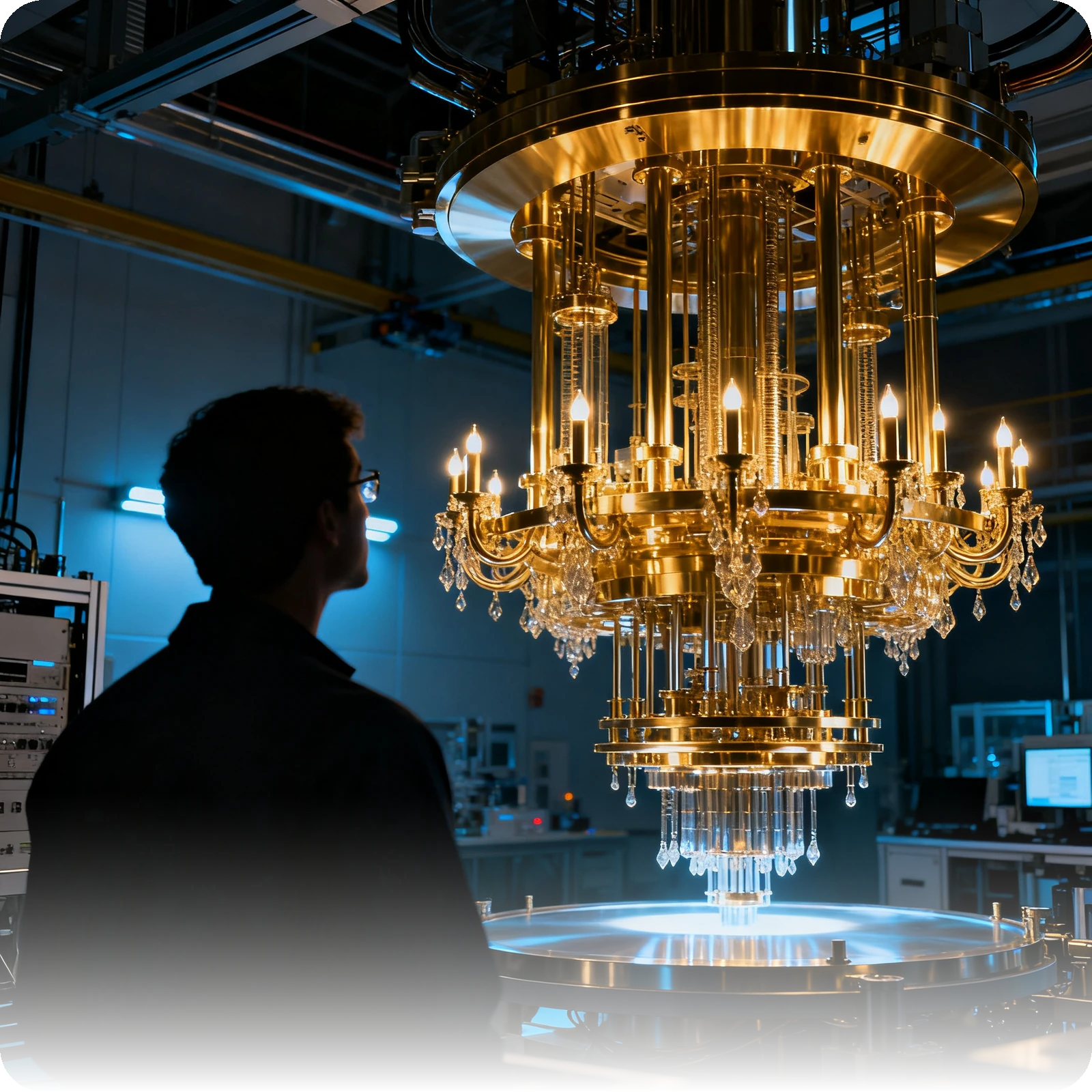
And the next frontier is already funded. The world's largest technology companies and several governments are investing billions into quantum computing — machines that compute in a fundamentally different way, suited to exactly the problems classical computers choke on.
I'll give you the honest version, because that's the house style: nobody can promise you the date. But the bet the big money is making is clear — when quantum hardware matures, AI will be among the first tenants, and the combination could make today's "smart" look like a pocket calculator. Superintelligent systems designing materials, drugs, logistics networks and financial models beyond anything a human team could hold in mind. That's the wave after this one. You don't need to act on it today. You need to know it's forming, because it tells you which direction the water is flowing.
I founded NovaDyne on one belief, which regular readers know by now: the machine takes the grind, the human moves up. Everything we ship is that belief, applied:
NovaCube — the AI-first ERP. Your quotations drafted, invoices issued (with MyInvois e-invoicing built in), approvals routed, payments chased politely on day nine, and the numbers watched around the clock — so management sees the truth of the business in real time instead of at month-end. The back office that runs itself; the owner who finally gets their evenings back.
The Sites — the AI-first web platform. Type your business into existence: the AI designs and hosts your website, then staffs it — drafting a reply to every WhatsApp enquiry the moment it lands, in Malay, English or Chinese, and taking booking requests, so no lead sits unanswered overnight while your competitors' contact forms sleep. You approve what goes out.
Cart2u — built for the kopitiam. Orders, cash settlement and daily takings handled at the counter, clearly and foolproof — so the uncle and auntie who feed the neighbourhood get big-chain clarity without big-chain complexity, and closing time isn't bookkeeping time.
NovaBoyle — the AI-first research team. For labs and chemical R&D: an AI scientist that reads the literature, plans experiments and analyses results — running on your own premises by default, because your formulas should never leave your building. (A researcher can opt into a cloud model for a harder question; your internal knowledge base never leaves, under any setting.)
Four products, different customers, one shape: AI does the repetitive 80% — the judgment, the relationships and the recipe stay yours. And because the intelligence layers onto what exists, adopting it is not a rebuild. It's an upgrade.

The businesses that won the last waves weren't the biggest — they were the earliest to adapt. The shop that took cards in the 90s. The restaurant on delivery apps in 2015. The stall with the QR code in 2020. Each looked slightly premature at the time. Each owned the years that followed.
This wave is bigger than all of those, and it's moving faster. The good news: you don't have to understand quantum computing to catch it. You just have to start where every wave starts — with the grind you already know you hate.
So here's my question to you, and I read every reply: what's the one task in your business you'd hand to a machine tomorrow if you trusted it?
Tell me. There's a good chance we've already built it.
Stanley is the founder of NovaDyne, an AI-first software company — novadyne.io · Views on future technology are forward-looking opinions; the honest answer to "when" is always "nobody knows exactly."
Previously from the founder: Every Machine That Was Going to Replace Us →