By Stanley — Founder, NovaDyne · August 2026 · 7 min read
Lately, a lot of friends, family and business associates have been asking me the same question, in different words:
"Stanley, you work in AI. Honestly — is it going to take our jobs?"
It's a fair question. It deserves an honest answer, not a sales pitch. So let me give you the honest answer, and it starts three hundred years ago.
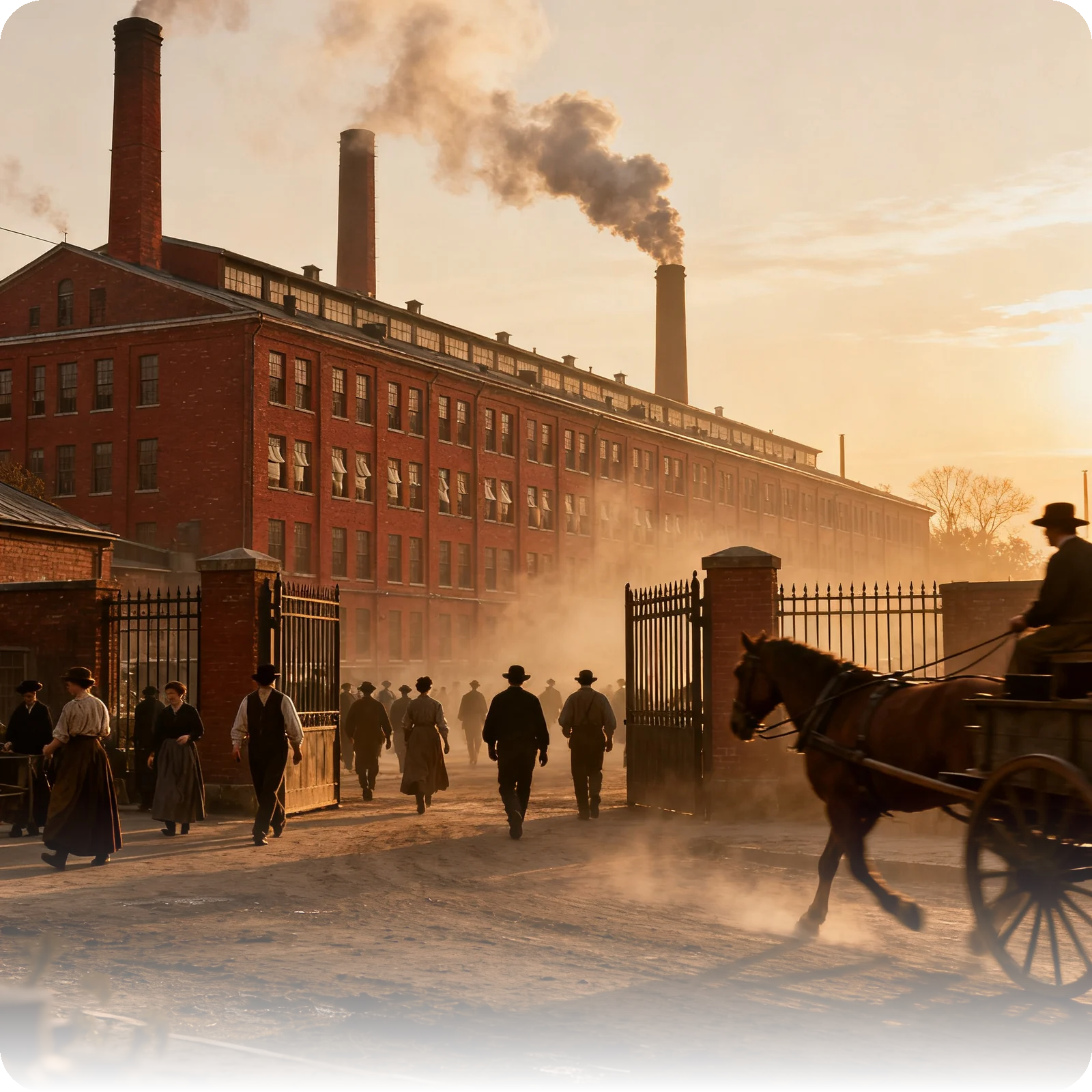
Before the industrial revolution, roughly 95% of human work was done with our hands and feet, sometimes with the help of an animal. Entire civilizations were structured around this fact — where people lived, what they ate, what they could dream of for their children.
Then we found coal. Then someone built a steam engine.
And people panicked. They said machines would take over the work and there would be no need for humans. Some said the opposite fantasy: humans would never need to work again — just sit back and collect the harvest. Both camps were completely sure of themselves.
Both were wrong. What actually happened was messier and more human: people pivoted. Nobody could say in advance how — that's the frightening part of every technology wave, and I won't pretend otherwise. But within a generation, millions had moved to cities and built new lives around factory work that hadn't existed when their parents were born. The work didn't disappear. It moved.
And then it kept happening, again and again:
The farm. In 1900, out of every 100 American working people, about 40 were farmers. Tractors and machines came, and today only 2 out of that 100 farm — yet we grow far more food. So what happened to the other 38 farmers? Did they starve without work? No — their children became teachers, engineers, nurses, shopkeepers, designers. Jobs their farming grandparents could not have named.
The bank teller. When ATMs arrived in the 1970s, everyone knew tellers were finished — a machine literally did the teller's job, 24 hours a day. Instead, something strange happened: ATMs made each branch cheaper to run, so banks opened more branches, and teller employment went up for decades. The job changed — less counting cash, more helping humans — but the machine that "replaced" them ended up multiplying them.
The spreadsheet. In 1980, an "accountant" spent most of the day doing arithmetic by hand. Then VisiCalc and Excel arrived and did in one second what took a week. Bookkeeping jobs shrank — but accounting, analysis and finance jobs exploded, because when calculation became free, everyone suddenly wanted ten times more of it. The people won; the pencil lost.
The pattern is remarkably consistent: the panic is always right about the disruption, and always wrong about the ending. The machine takes the grind. The human moves up — to judgment, to relationships, to the work of deciding what's worth doing. Every single time, the new jobs were unimaginable beforehand. That's not a bug in the story. That's how the story works.
If you doubt the pattern, look at your own hand.

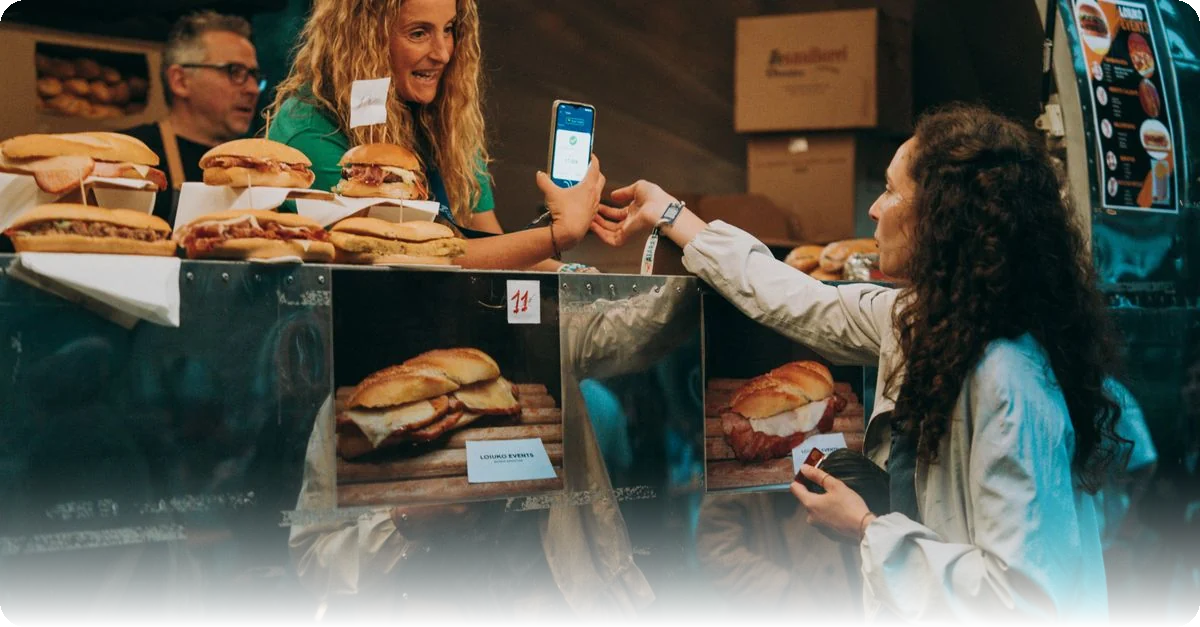
Fifteen years ago, a phone made calls. Today, look at what happened at any street stall: your mother scans a QR code to pay for satay. You booked the parking, ordered the groceries, queued at the clinic, split the dinner bill, and video-called your family overseas — all from the same slab of glass, without ever being "trained." Nobody attended a course. It simply became life, one small convenience at a time, until a person without a phone became the unusual one.
Nobody in 1995 predicted the shape of this. Told about "a portable phone," they imagined exactly that — a phone you carry. They did not imagine Grab, WhatsApp video calls with grandchildren, or paying a hawker by pointing your camera at a sticker. The prediction failed not by being too bold, but by being too small.
This is my honest view of AI: it will not arrive as a robot that walks in and sits at your desk. It is arriving the way the phone did — one small convenience at a time, woven into ordinary days.
It will draft the quotation while the boss drives home. Answer the shop's WhatsApp at 2am in three languages. Chase the invoice politely on the ninth day. Read the contract and flag the one clause that bites. Watch the numbers and say, quietly, "this month looks unusual — look at this before it becomes a problem."
People imagine the future of AI as Jarvis from the movies — a clever voice that obeys. I run an AI-first software company, and I'll tell you what I genuinely believe: Jarvis is the small part. The real thing will be as unimaginable to us now as TikTok was to a man holding a Nokia in 1999. What I can tell you is the direction, because it's the same direction as every wave before: the grind moves to the machine, and the human moves up.
And humans, as humans, will do what we have always done. We will pivot. We will find the way. We always have — not because it's painless, but because it's who we are.


Today's craft — tomorrow's tools. The human stays at the center.
This belief is why I started NovaDyne.
Not to replace anyone. To do for today's business owners what the tractor did for the farmer and the spreadsheet did for the accountant: take the grind, and hand back the hours.
We build AI-first software — systems that answer the customer at midnight, keep the books straight, chase the paperwork, watch the numbers, and tell you the truth about what's working (even when it's not the answer you wanted — especially then). The machine does the part that was never really human to begin with. What's left is the part that always was: the judgment, the relationships, the craft, the decision about what your business should become.
Three hundred years ago, a farmer looking at the first steam engine could not have imagined his great-granddaughter designing aircraft. We are standing exactly where he stood. I don't know precisely what work looks like in thirty years — nobody honest does. But I know which side of history the pattern is on, and I know what my company's job is:
To bring people to that new frontier — with the machines carrying the luggage.
If you're a business owner wondering what AI means for you, my door is open. Ask me the hard questions. You'll get the honest answers.
Stanley is the founder of NovaDyne, an AI-first software company — novadyne.io
Previously from the founder: I Asked an AI to Beat the Market. It Told Me the Truth Instead. →